
 EN
EN
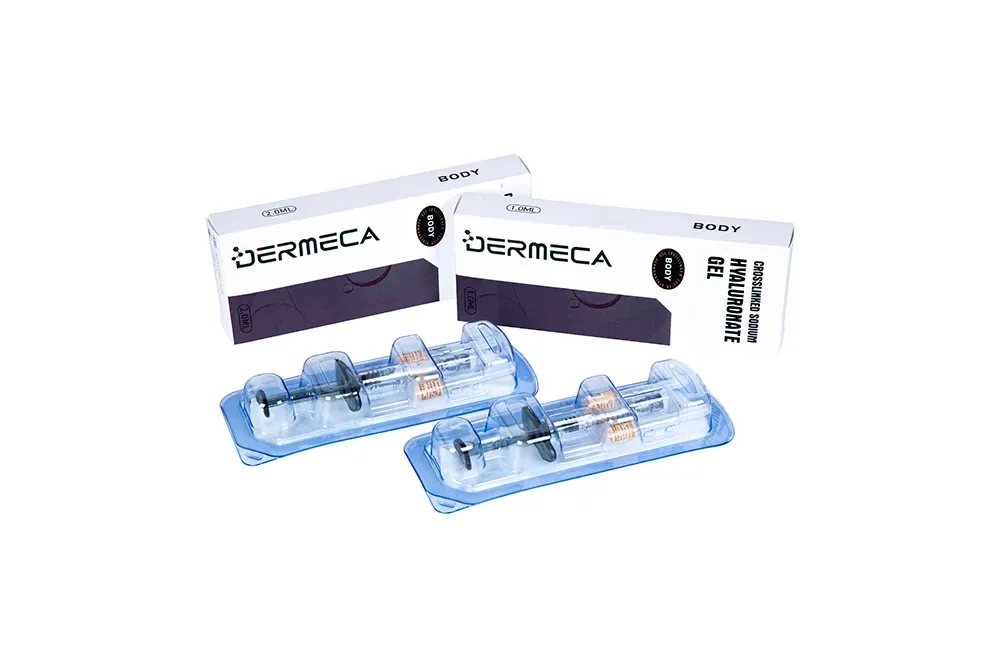
Understanding Facial Anatomy and Dynamic Zones for Precise Dermal Filler Selection
Midface Foundation: Why Bone Support and Soft Tissue Volume Loss Demand High-Lift Fillers
The midface serves as the architectural cornerstone of facial aesthetics. Age-related bone resorption—documented in longitudinal CT studies showing up to 12% volumetric loss in the zygomatic region by age 60—and deep fat pad atrophy create profound structural deficits. High-G′ dermal fillers with robust lifting capacity counteract this collapse by acting as bio-scaffolds, restoring projection and contour without compromising facial harmony. Their rheology mimics native tissue support, enabling durable correction when placed in the deep subperiosteal or supraperiosteal plane.
Tear Troughs and Periorbital Delicacy: Avoiding Tyndall Effect with Ultra-Thin, Low-G′ Hyaluronic Acid Fillers
Periorbital regions demand exceptional precision due to skin thickness averaging just 0.5 mm—among the thinnest on the face—and dense vascular networks. Overly viscous or highly cross-linked fillers risk visible bluish discoloration (Tyndall effect) and vascular compromise. Ultra-thin, low-G′ hyaluronic acid formulations integrate seamlessly in these zones, correcting hollowing while preserving translucency and natural movement. As emphasized in the American Society for Dermatologic Surgery consensus guidelines, precise superficial-to-mid dermal placement—not product substitution—is the primary safeguard against complications here.
High-Mobility Areas (Lips, Marionette Lines, Nasolabial Folds): Prioritizing Cohesivity and Elasticity Over Rigidity
Dynamic facial zones require fillers that move naturally with muscular activity. Highly rigid, over-cross-linked products often yield unnatural stiffness, especially in the lips and marionette complex, where repetitive motion exceeds 1,000 cycles per day. Optimal selection favors moderate cohesivity paired with high elasticity—properties that maintain shape during animation while allowing soft tissue integration. This balance prevents the “overstuffed” appearance and preserves expressive fidelity, a key outcome validated in patient-reported satisfaction metrics from the 2022 Journal of Drugs in Dermatology multicenter trial.
Matching Dermal Filler Types to Facial Regions Based on Clinical Evidence
Lips and Tear Troughs: Thin, Low-Viscosity HA Fillers (e.g., Restylane Silk, Juvederm Volbella)
Precise placement in delicate areas like the lips and tear troughs demands fillers engineered for superficial integration. Thin, low-viscosity hyaluronic acid gels—with G′ values under 150 Pa—spread evenly in the papillary dermis, correcting fine lines and subtle volume loss without risking Tyndall effect or edema. Their low cohesivity ensures softness and natural movement, critical for avoiding stiffness in mobile zones. Clinical evidence supports their use in these regions: a 2023 randomized comparative study found significantly lower rates of palpable nodules and patient-perceived stiffness versus medium-G′ alternatives at 4-week follow-up.
Cheeks, Temples, and Jawline: Medium-to-High Cohesivity Fillers (e.g., Juvederm Voluma, Restylane Lyft, RHA 4)
Structural restoration in the cheeks, temples, and jawline relies on fillers with sufficient mechanical integrity to replace diminished bone and deep fat volume. Medium-to-high cohesivity products—characterized by G′ values between 300–900 Pa and elevated cross-linking density—resist deformation under dynamic pressure, enabling predictable lift and long-term contour definition. A 2023 multi-center study demonstrated that such fillers maintained >80% of cheek volume restoration at 12 months, underscoring their suitability for deep subcutaneous or supraperiosteal placement. Selecting appropriate cohesivity prevents lateral migration and ensures stable, natural-looking rejuvenation in foundational zones.
| Facial Region | Filler Characteristic | Key Benefit | Placement Depth |
|---|---|---|---|
| Lips, Tear Troughs | Low viscosity, Low G′ | Natural integration, Movement | Superficial to mid |
| Cheeks, Temples, Jaw | High cohesivity, High G′ | Volume restoration, Lift | Mid to deep tissue |
Key Physicochemical Properties That Determine Dermal Filler Performance by Area
G′ Value, Cross-Linking Density, and Particle Size: How They Predict Lifting Capacity vs. Natural Integration
The elastic modulus (G′) quantifies a filler’s resistance to deformation—directly correlating with lifting capacity. High-G′ gels (>500 Pa) provide strong structural support ideal for deep placement in the cheeks or jawline; low-G′ gels (<200 Pa) offer pliability suited for superficial layers like the tear trough or lip vermilion. Cross-linking density and HA concentration govern both G′ and cohesivity: denser networks increase stiffness and longevity but reduce spreadability, while lower cross-linking enhances tissue integration at the cost of durability. Particle size further modulates behavior—smaller particles (<300 µm) enable smooth injection and seamless blending in thin-skinned areas, whereas larger particles (>500 µm) contribute to volume and projection in deeper planes. Matching these three interdependent properties to regional anatomy and functional demand is essential for safe, effective, and aesthetically harmonious outcomes.
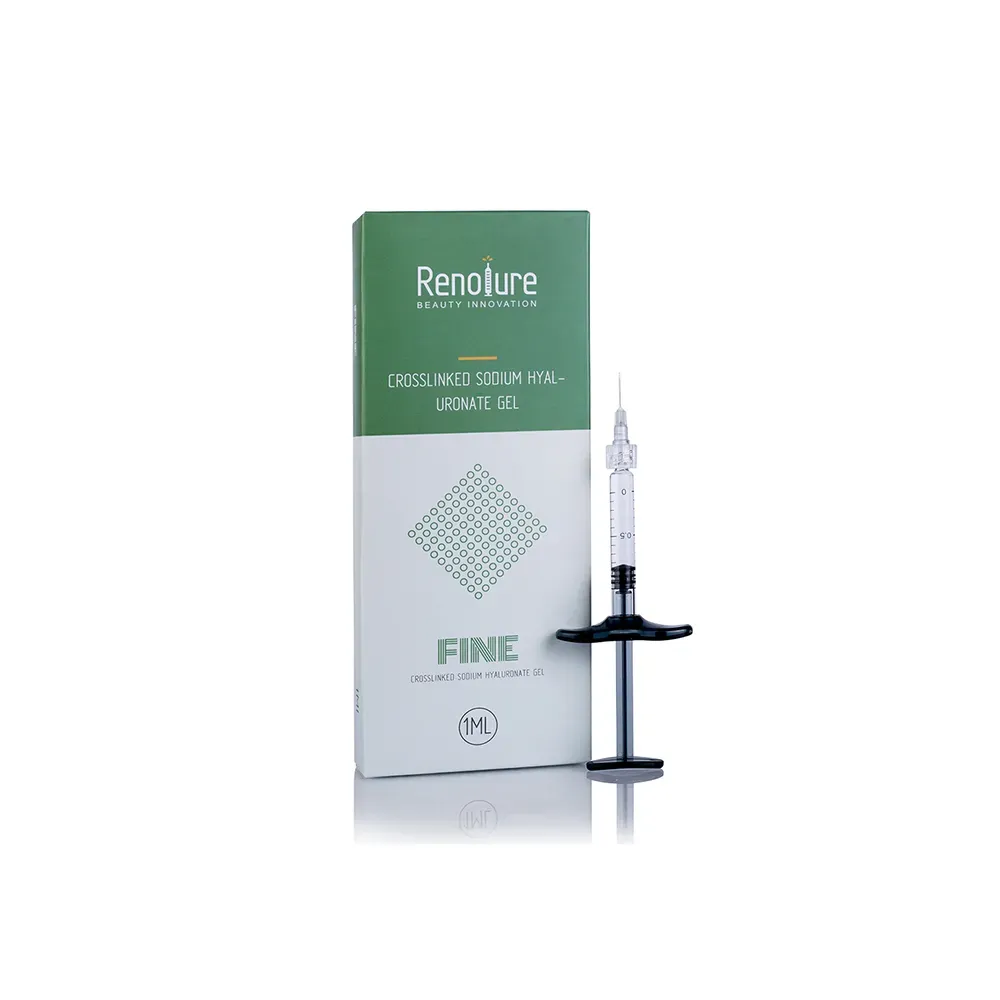
FAQs
What is the significance of G′ values in selecting dermal fillers?
G′ values indicate a filler’s resistance to deformation, directly impacting its lifting capacity. Higher G′ values are better for areas needing structural support, while lower G′ values suit thin-skinned regions requiring pliability.
Why is cross-linking density important in filler selection?
Cross-linking density affects a filler’s stiffness and longevity. Higher density provides durability but decreases spreadability, making it ideal for deeper tissue, while lower density ensures better natural integration in superficial layers.
How does particle size influence filler application?
Smaller particle sizes allow for smooth injection and blending in delicate areas like tear troughs and lips. Larger particles are better for volume and projection in deeper planes such as the cheeks and jawline.
What causes the Tyndall effect, and how can it be avoided?
The Tyndall effect occurs when overly viscous or highly cross-linked fillers are placed superficially, leading to bluish discoloration. Using low-G′ hyaluronic acid fillers and precise placement techniques prevents this issue.
Table of Contents
-
Understanding Facial Anatomy and Dynamic Zones for Precise Dermal Filler Selection
- Midface Foundation: Why Bone Support and Soft Tissue Volume Loss Demand High-Lift Fillers
- Tear Troughs and Periorbital Delicacy: Avoiding Tyndall Effect with Ultra-Thin, Low-G′ Hyaluronic Acid Fillers
- High-Mobility Areas (Lips, Marionette Lines, Nasolabial Folds): Prioritizing Cohesivity and Elasticity Over Rigidity
- Matching Dermal Filler Types to Facial Regions Based on Clinical Evidence
- Key Physicochemical Properties That Determine Dermal Filler Performance by Area
- FAQs