
 EN
EN
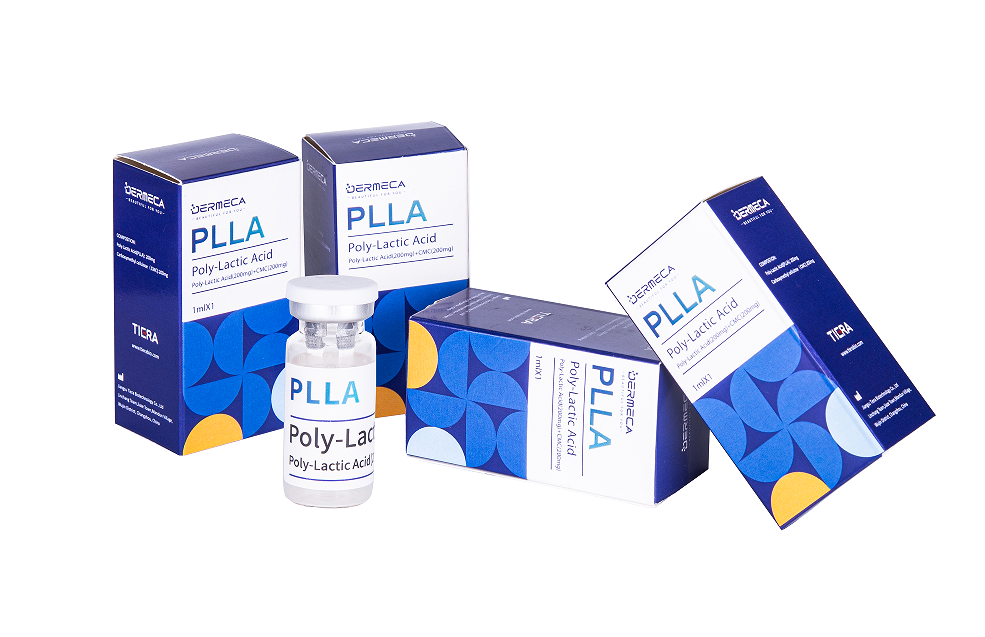
The Science Behind PLLA and Collagen Stimulation
Molecular mechanism of PLLA in dermal remodeling
When injected into the skin, Poly-L-lactic acid (PLLA) starts a chain reaction that boosts collagen production via a carefully managed immune response. What happens is that these tiny PLLA particles create small injuries when they go into the body. This injury attracts special cells called macrophages, and those macrophages then let out important growth signals like TGF-beta. These signals are basically messengers that tell the skin's workhorse cells, the fibroblasts, to get busy making collagen. A recent study published in 2025 by Plastic and Reconstructive Surgery Global Open found something pretty impressive about this whole process. They observed that after just six months, there was actually a 34% jump in type I collagen levels in treated areas. And here's another interesting point about PLLA: since it breaks down very gradually over time, it keeps releasing lactic acid molecules into the surrounding tissue. This slow release helps keep those fibroblasts active for longer periods, maintaining the collagen boost effect well beyond initial treatment.
Poly-L-lactic acid microspheres and their role in sustained collagen synthesis
PLLA microspheres measuring around 40 to 50 microns act like tiny biodegradable scaffolds in the body, creating sort of a 3D framework where collagen can deposit in an organized way. According to research published in International Journal of Biological Macromolecules last year, these little particles break down at about half a percent to one percent each week, which keeps those important fibroblasts activated somewhere between nine and twelve months. What sets them apart from regular fillers that disappear too quickly is how slowly they dissolve, matching up nicely with our skin's own healing rhythm and helping build new collagen steadily over time. The science actually backs this up pretty well too - when we look at collagen type III specifically, there's been a reported boost of approximately twenty two percent with these scaffold structures versus products without such support systems.
Temporal progression of neocollagenesis after PLLA injection
Collagen regeneration unfolds in three distinct phases following PLLA treatment:
- Weeks 1–4: Inflammatory cells clear debris and initiate fibroblast recruitment.
- Months 2–6: Collagen synthesis peaks, increasing skin thickness by an average of 0.3mm.
- Months 6–24: Remodeling strengthens the extracellular matrix through cross-linked collagen networks, improving tensile strength by 41%.
Ultrasound imaging confirms this phased development results in natural, progressive volume restoration without abrupt changes.
Fibroblast Activation and Type I/III Collagen Production
How PLLA Triggers Fibroblast Proliferation and Activity
The activation of fibroblasts happens through a complex biochemical process started when macrophages release certain growth factors like TGF-β and PDGF. Research from clinical trials back in 2022 showed that this kind of stimulation boosts fibroblast numbers by around 40 to 60 percent over normal tissue levels. After they're switched on, these fibroblasts actually move towards the PLLA particles and kick off what becomes a lengthy remodeling phase lasting anywhere between six and twelve months. During this time, they work on rebuilding the extracellular matrix, which forms the basis for longer lasting structural improvements in tissues.
Histological Evidence of Increased Type I and III Collagen Post-PLLA Treatment
Biopsy analyses reveal significant increases in collagen following PLLA treatment:
| Collagen Type | Percentage Increase | Key Structural Role |
|---|---|---|
| Type I | 70–90% | Provides tensile strength |
| Type III | 10–30% | Enhances elasticity |
This balanced ratio closely mirrors youthful skin composition. Dermal thickening–averaging 1.2mm–becomes visible between 3 and 6 months post-treatment, reflecting robust new collagen formation.
Long-Term Extracellular Matrix Regeneration Through Fibroblast Signaling
The way PLLA breaks down matches up pretty well with how our bodies make collagen, which keeps those fibroblasts working overtime for quite some time. Even when the material is totally gone from the body somewhere between 12 to 24 months later, these tiny workers still keep churning out collagen thanks to something called autocrine signaling. Scientists refer to this continuing activity as the matrix memory effect. That's actually why most people notice their best results around the six month mark, but sometimes see continued improvement lasting past two full years after treatment.
Immune-Mediated Neocollagenesis: The Role of Macrophages and Inflammatory Signaling
Controlled Inflammatory Response and Macrophage Recruitment by PLLA
When PLLA is introduced into the body, it triggers an inflammatory process that plays a key role in tissue repair and regeneration. As these tiny microsphere particles slowly break down over time, they emit what scientists call damage-associated molecular patterns (DAMPs), which essentially act as signals to attract macrophage cells. This mechanism works similarly to how the body responds to minor injuries, according to research published in Frontiers in Medicine back in 2018. Once recruited, most of these immune cells transform into the M2 type that fights inflammation rather than fueling it. They then produce substances such as TGF-beta, which helps activate fibroblasts to rebuild damaged tissues. What makes this particularly interesting is that the whole process remains contained within certain limits, allowing for effective healing without the typical signs of extended inflammation like persistent redness or uncomfortable swelling that we usually associate with wounds.
From Inflammation to Regeneration: Cytokine-Driven Collagen Production
When the body moves from the inflammatory phase to actual tissue repair, certain cytokines play a major role in this transition. Macrophages of the M2 type produce substances like TGF-beta and interleukin-10 (IL-10). These molecules actually increase collagen production at the genetic level while also encouraging fibroblasts to multiply more actively. Research published in Nature back in 2021 showed something pretty impressive too - when exposed to TGF-beta, fibroblasts in lab cultures produced nearly double the amount of collagen (about 187%) just three days later. The way PLLA works involves keeping cytokine levels relatively low for months on end. This creates what scientists call a biochemical feedback loop. As the particles slowly break down, they keep activating macrophages, which then continue supporting the remodeling of extracellular matrix components throughout the healing process.
Clinical Outcomes of Gradual Collagen Stimulation with PLLA
Sculptra’s Mechanism of Action in Facial Volume Restoration
Facial volume restoration with PLLA works in two main ways. The biodegradable microspheres trigger an immune response that gets fibroblasts going so they start making fresh type I and III collagen. What makes PLLA special is how it acts like a framework for rebuilding the extracellular matrix. Clinical studies from 2023 found that around 7 out of 10 patients experienced noticeable skin thickening when measured after six months compared to their starting point. This is quite different from those hyaluronic acid fillers that give immediate results. With PLLA, people typically see changes slowly develop between 8 to 12 weeks as the collagen actually matures in the skin. That gradual process tends to look much more natural and can really help turn back some signs of aging without looking overdone.
Long-Term Efficacy and Patient Results in Dermal Augmentation
Long term studies over five years indicate around two thirds of patients keep at least half the improvement seen in their nasolabial folds and midface volume thanks to ongoing collagen changes in the skin. About eight out of ten people who got treated said they were happy with results after roughly twenty five months, which makes PLLA really stand out when it comes to lasting, natural looking facial enhancements. For best outcomes most folks need between three and four sessions with about a month gap between each one. This gives the body time to gradually integrate the material into tissues, something confirmed by important collagen research papers published recently. What many patients appreciate is how this approach builds up improvements slowly without those drastic transformations everyone wants to avoid, yet still tackles the deeper structural issues causing volume loss beneath the surface.
PLLA vs. Other Biostimulatory Fillers: A Comparative Overview
PLLA, CaHA, and PCL: Differences in collagen stimulation and longevity
Although PLLA (Poly-L-lactic acid), CaHA (Calcium Hydroxylapatite), and PCL (Polycaprolactone) all promote collagen production, their mechanisms and outcomes vary:
| Characteristic | PLLA | CaHA | PCL |
|---|---|---|---|
| Primary Action | Gradual collagen synthesis via immune-mediated response | Immediate volume + collagen stimulation | Structural scaffolding + collagen induction |
| Collagen Onset | 3–6 months | 1–2 months | 2–4 months |
| Longevity | 18–24 months | 12–15 months | 24+ months |
A 2023 comparison study highlights PLLA’s unique dual-phase action: an initial inflammatory phase recruits fibroblasts, followed by extended type I collagen synthesis lasting 6–9 months.
Why choose PLLA for sustained, natural-looking rejuvenation?
The way PLLA stimulates new collagen growth actually works quite similarly to how our bodies heal naturally, which helps avoid those overfilled looks that happen in about one out of every five CaHA treatments according to Dermatology Reports from last year. When compared to PCL's stiff structure, PLLA creates a more natural looking collagen network because it breaks down gradually thanks to our own immune cells. That makes it especially good for revitalizing the whole face rather than just spot treating areas. Looking at real world results, patients tend to be really happy with PLLA long term too. After a year, around 89% report satisfaction compared to only 76% with CaHA, especially after going through between six and twelve sessions. What sets PLLA apart is its unique ability to plump up facial contours without freezing expressions in place like some fillers do. Research in aesthetic medicine points to something special about the L-isomer form of PLLA that not only plays nicely with our tissues but keeps encouraging collagen production over time, something other similar products just can't match.
Table of Contents
- The Science Behind PLLA and Collagen Stimulation
- Fibroblast Activation and Type I/III Collagen Production
- Immune-Mediated Neocollagenesis: The Role of Macrophages and Inflammatory Signaling
- Clinical Outcomes of Gradual Collagen Stimulation with PLLA
- PLLA vs. Other Biostimulatory Fillers: A Comparative Overview