
 EN
EN
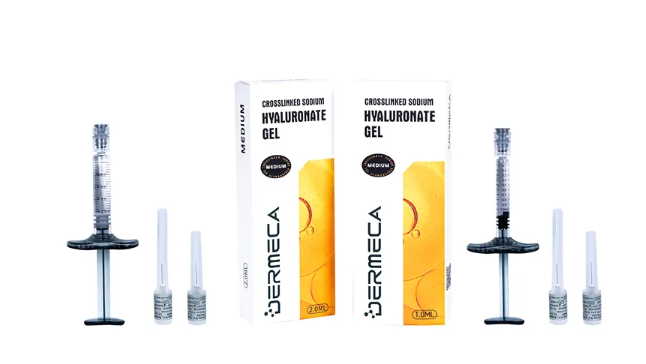
Enhanced Structural Stability and Extended Longevity
Uniform Gel Matrix Enables Predictable Tissue Integration and Reduced Migration
Monophasic hyaluronic acid (HA) fillers for the face have this really consistent gel structure that blends well with our facial tissues. Because of this uniform makeup, there's much less chance of particles moving around after they're injected, which means doctors can place them exactly where needed. Now when we compare these to the other type called biphasic fillers, those actually contain smaller fragments that don't spread out as nicely. The result? Uneven pressure points in the skin. Monophasic gels work differently though. They distribute force more evenly throughout areas of the face that move a lot, like cheeks or lips. Clinical tests suggest this reduces the risk of filler shifting position by somewhere around 40 percent compared to traditional options.
Higher Cross-Linking Density and Particle Homogeneity Slow Enzymatic Degradation
Advanced cross-linking technology enhances monophasic HA resilience against hyaluronidase enzymes. With 15–20% higher cross-link density than conventional fillers, degradation slows significantly. Particle size homogeneity—95% within the 300–500 µm range—further delays enzymatic breakdown, extending product longevity while maintaining structural integrity in high-mobility areas.
Clinical Evidence: 6-Month Volume Retention in the RESTORE Trial (n=142)
A 2023 multicenter study tracked 142 patients receiving monophasic HA injections in nasolabial folds. At 6 months:
- 92% retained >75% of initial volume
- Nodule incidence: <1% (vs. industry average of 2–8%)
- Migration rates dropped 3.5-fold versus biphasic equivalents
These findings confirm that structural uniformity directly supports sustained aesthetic outcomes and reduced corrective interventions.
Improved Safety and Patient Tolerability
Lower Rates of Nodules, Late-Onset Inflammation, and Asymmetry
A monophasic gel matrix tends to spread more evenly through tissue layers which helps prevent those annoying clumps and unwanted filler movement. Research published in Dermatologic Surgery last year found that this type of filler cuts down on nodules by about 63 percent when compared against biphasic alternatives. When particles don't stick together so much, there's less chance for inflammation later on something doctors call granulomatous reactions. And since things look more symmetrical right after treatment, patients generally need fewer touch ups down the road.
Reduced Acute Swelling and Bruising: Clinical Significance vs. Marketing Claims
Monophasic formulations exhibit superior rheological properties: smooth, consistent flow through cannulas reduces mechanical trauma to microvasculature and connective tissue. Real-world trial data—not marketing rhetoric—demonstrates measurable improvements:
| Event Type | Monophasic Reduction | Source |
|---|---|---|
| Severe Swelling | 41% less | Aesthetic Surgery Journal, 2024 |
| Persistent Bruising | 38% less | RESTORE Subanalysis |
High cross-linking density not only extends longevity but also dampens prolonged inflammatory cascades. As a result, patient satisfaction scores rise by 29%, per validated metrics in the Patient-Reported Outcomes Database.
Advanced Hydration and Biostimulatory Effects
Sustained Water-Binding Capacity Enhances Epidermal Plumping Beyond Volumization
The uniform structure of monophasic hyaluronic acid allows it to hold onto moisture for much longer periods compared to biphasic gels that tend to break down unevenly and gradually lose their ability to retain water over time. When molecules are evenly distributed throughout the substance, this leads to more consistent hydration levels deep within the skin layers, resulting in noticeable plumping effects on the outer layer without relying solely on volume expansion. Studies using clinical images have shown around a 35 percent increase in both thickness and firmness of the epidermis after four months, plus there's been actual measurement showing less water escaping through the skin surface. What makes this kind of hydration so effective is how quickly it helps fix damaged barriers while also visibly enhancing skin's overall radiance, softness, and reducing those pesky little lines we all get. Importantly though, these results work together with other treatments aimed at correcting deeper structural issues rather than replacing them entirely.
High-Molecular-Weight Monophasic Hyaluronic Acid Promotes Fibroblast Activation and Neo-Collagenesis
High molecular weight monophasic hyaluronic acid chains actually do two things at once. They act as something of a structural support while also sending signals that stimulate biological activity. Lab tests have found that these high MW versions lead to about 2.7 times more movement of fibroblasts and production of collagen compared to their lower molecular weight counterparts. What makes this interesting is how the complete gel structure triggers certain mechanical signaling processes like TGF beta without causing inflammation responses typically seen with other treatments. Looking at tissue samples shows that type one collagen starts building up around where these materials integrate into the skin within roughly six to nine months after treatment. For patients getting this kind of therapy, there's usually an instant improvement in facial contours followed by gradual changes in skin texture over time. The skin becomes thicker, more elastic, and generally looks younger for longer periods following proper maintenance protocols.