
 EN
EN
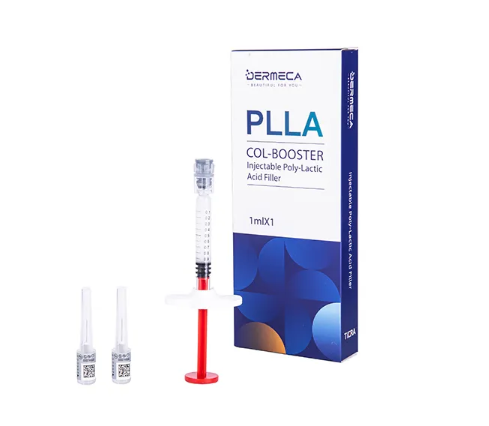
The PLLA Mechanism: From Biodegradation to Fibroblast Activation
Controlled biodegradation and macrophage-mediated inflammatory signaling
When injected, PLLA (also known as poly-L-lactic acid) starts working on stimulating collagen production because it breaks down at a controlled pace. The tiny particles slowly get broken down by water in the body, turning into lactic acid molecules over several months or even years. As these particles degrade, they cause what's called a low-grade inflammatory reaction driven mainly by macrophages. These immune cells basically wrap around the particles and then release various chemicals like cytokines and growth factors which help create conditions favorable for tissue regeneration. How fast this whole process happens depends on factors such as the size of the PLLA molecules and how tightly packed they are, along with characteristics of the surrounding tissues. Research using both images and microscopic examination has shown that these particles can stay in place for as long as 28 months, continuing their beneficial effects without causing significant inflammation.
Fibroblast recruitment, proliferation, and collagen synthesis pathways
Macrophages release signals that bring fibroblasts to where treatment happens and kickstart important healing processes. Once there, these fibroblasts multiply and start making more enzymes needed for collagen production, which leads to new collagen formation over time. Looking at tissue samples and lab tests shows something interesting happens when fibroblasts come into contact with breaking down PLLA particles. They actually produce much more Type I collagen, which gives tissues their strength and shape, along with Type III collagen that acts like a temporary framework during healing. Around six months later, most of the new collagen (over 80%) is the stronger Type I variety. This shift indicates real tissue maturity has occurred instead of just temporary stuff hanging around.
Temporal Dynamics of PLLA-Induced Neocollagenesis
Weeks to months: Staged collagen deposition (Type I/III ratio shifts)
The process of collagen regeneration triggered by PLLA actually unfolds according to a pretty specific biological schedule. Around the first month mark, activated macrophages start calling in fibroblasts, kicking off production of Type III collagen, which acts as kind of a framework for building up the new extracellular matrix. Things change around the third month when continued hydrolysis keeps those fibroblasts working overtime, gradually switching their focus from Type III to the stronger, more lasting Type I collagen. We can see this shift happening through changes in the Type I/III ratio over time. Initially Type III dominates, but by about six months Type I makes up over 80% of all collagen present, something researchers confirmed using controlled studies on minipigs back in 2024 according to Lee-Sung's work. This careful timing means that mechanical strength builds alongside the restructuring of the extracellular matrix, creating a balanced development process.
Histological confirmation: Biopsy evidence at 6, 12, and 24 months
Histological analyses across longitudinal biopsy studies provide robust, direct evidence of PLLA's mechanism and durability:
- 6-month biopsies show organized bundles of mature Type I collagen replacing degraded PLLA particles, with fibroblast density peaking at 152% above baseline;
- 12-month samples reveal highly organized collagen networks and measurable dermal thickening-- ranging from 40-62%-- indicating structural consolidation;
- 24-month evaluations demonstrate near-complete metabolic clearance of residual particles alongside persistent collagen volume, with density remaining 30-45% above pre-treatment baselines.
This sustained neocollagenesis confirms PLLA's capacity to initiate self-reinforcing tissue regeneration-- not merely temporary volumization.
Long-Term Structural Benefits: Sustained Volume and ECM Remodeling
PLLA works by actually improving the skin's structure over time through what we call ECM remodeling instead of just filling space temporarily. Looking at histology samples, researchers have found that collagen production goes up around 65% after about six months. These new Type I fibers develop into something that can really hold weight and blend right in with the existing tissue. What makes this different from regular fillers? Well, these stimulated networks actually make the skin more elastic, tougher, and give better support across all dimensions. Doctors tracking results see that roughly 8 out of 10 patients still look visibly better even after two years, and tests keep showing their skin resists sagging caused by aging much longer than usual. The end effect? A correction that looks natural and lasts because it builds on the body's own healing processes rather than relying on foreign substances sitting there doing nothing.
Clinical Relevance of PLLA's Collagen-Stimulating Profile
Differentiating PLLA from HA Fillers and Other Biostimulators
The way PLLA works is actually quite different from those hyaluronic acid fillers we all know so well. HA gives instant volume but doesn't last very long, usually breaking down somewhere between six and eighteen months. Now PLLA functions as what they call a biostimulator. What this means is it basically tricks the body into thinking there's something foreign present, which then gets those fibroblast cells working overtime to produce new collagen right where it's needed most. When looking at how it stacks up against similar products such as polycaprolactone (PCL), PLLA seems to have a special knack for boosting Type I collagen production specifically. And this matters because Type I collagen forms the foundation of skin structure over time. Recent research published in 2024 showed that after just six months, patients treated with PLLA had about 68 percent more Type I collagen density compared to those who received treatments based on PCL instead.
Real-World Durability: Patient Outcomes Beyond 24 Months
The reason PLLA lasts so long clinically is because it works in two stages. First, it triggers an inflammatory response that gets fibroblasts moving to the area, then stays active for months through slow breakdown. Looking at tissue samples, we see collagen structures hold onto about 82% of their strongest form even after 24 months, which beats most hyaluronic acid fillers hands down. Real world results tell the same story. Patients notice their skin looks tighter and fuller well past the two year mark, with around 45% still seeing good results after nearly two and a half years. What makes this possible? The collagen stays strong relative to elastin levels, and people don't need touch ups as often as with other treatments. That's why many dermatologists consider PLLA one of the best options when looking for lasting skin rejuvenation over time.